Based on the supplied transcript. Punctuation and paragraph breaks have been added, with repeated fillers and false starts reduced for readability. Unclear speech is marked where necessary. The speaker’s opinions, product descriptions, and recollections are retained.
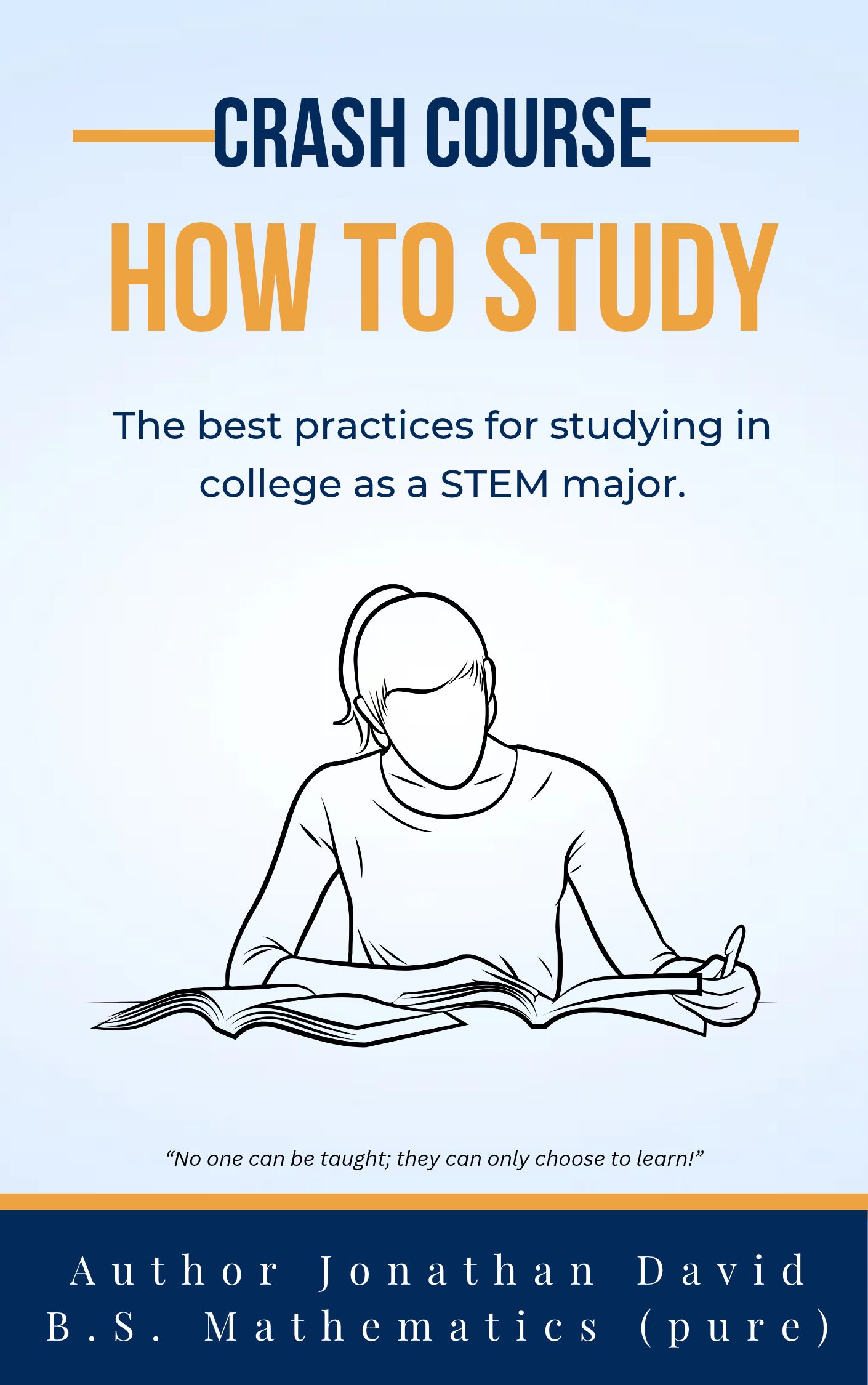
Hola, everybody. This book is How to Study in College and Land a Job Before Your Graduation.
I wrote it based on personal work experience before college. I’ve been employed since I was young and worked full time in sales.
I tried business school and psychiatry school. I didn’t finish those, obviously, but I attempted different things in my life. Then I tutored people for about 15 years.
I watched students fail and succeed, had my own experiences, worked professionally, ran businesses, and completed more than 220 college credit hours.
I put this little book together. It’s a little gem called How to Study in College.
It’s primarily for STEM majors. If you have to take calculus, this book is for you.
I discuss preparing for mathematics and show how to structure solutions in mathematics and physics.
I explain writing exam solutions for maximum credit and understanding the difference between learning and taking an exam.
There are strategies in college. It’s more than taking a course and earning a GPA.
I think GPA is a trick of the mind for STEM majors, particularly the mathematics, physics, and engineering students I usually address. Chemistry or medicine is a different situation.
I compare it with IQ tests. I don’t believe one person can determine another person’s intellect through a test. If you think that number establishes your intellect, I think you’ve missed the point.
Here’s an example of taking notes from a physics textbook. It’s a real example using University Physics. I collected words and equations from the book and show how to organize them.
I discuss proper studying and related topics. This is part of the Triple Play bundle.
The bundle is designed to repair damage from relying on internet resources instead of developing your own education.
Read the code of conduct and syllabus. Use the textbook and attend lecture.
That isn’t an ancient approach to learning. It’s like stretching and lifting weights to prepare for football. You can’t step onto the field without developing strength.
College is the gym for your brain. These exercise problems have already been solved. Getting someone else or a tool to solve them isn’t impressive.
If you aren’t willing to lift the weights, don’t go to the gym.
This book is intended to make that clear. People have read it and told me, “Thank you. I get it now.”
It’s a short read: about 52 textbook-sized pages in this version, or about a hundred pages at a smaller book size.
Personally, I would have it read aloud. I plan to make an audiobook, perhaps beginning today. I need to get the book from storage.
It’s important to have a reality check. You can damage your education by arguing that you already know everything when you lack experience.
You’re in college because you’re inexperienced, uneducated, and preparing to become employable.
If you argue with someone experienced, educated, and employable, I think you’re in the wrong place and need help.
This book is meant to help crack that shell.
This is an introduction so you can see what it looks like. It covers preparing for a STEM degree, preparing for mathematics, titling and writing work, treating a mathematics question like an essay, technology, maximizing points, and studying.
If you purchase the Triple Play bundle, it comes with about a thousand recordings.
I’ll show you at—[unclear website name]. It’s $99 for the books and related material, perhaps around 2,000 pages, plus roughly 200 to 300 podcasts and about 700 videos of me writing the books.
This is material from my original YouTube channel. I later realized I needed to change the message, but I still consider the literature valuable for STEM majors taking calculus.
The bundle is intended either to prepare you for college or help repair gaps after relying on Khan Academy, Wyzant tutoring, ChatGPT, AI, or pirated solution manuals.
If you reach junior year without knowing how to navigate a textbook, you’re in trouble. This material is meant to help.
That was the older mission. The videos are available through a one-time purchase, or you can pay monthly if you prefer.
My new mission is the research program and the structure I’m building on the website.
I take a book and make a crash course with one question from each section, showing how to use the textbook.
It isn’t just about solving a problem. It’s about reading the textbook. Once you see the process, you can repeat it.
Members will have a Q&A area. If I haven’t covered a section, you can request it.
I’ll be launching that—[recording ends].